The European Court of Auditors Review 05/2025 offers one of the most thorough analyses of how Smart Specialisation Strategies (S3) are driving regional innovation across Europe — guiding over €70 billion in cohesion policy investments between 2014–2027.
Key messages and insights
1. Strategic focus, but limited coherence S3 replaced fragmented spending with targeted regional priorities. However, coherence with EU-wide industrial and skills agendas (e.g. semiconductors, hydrogen, green transition) remains weak, reducing impact.
2. The Entrepreneurial Discovery Process (EDP) This participatory approach — involving businesses, academia and civil society — is now mandatory, but 46% of regions find it highly demanding. Many lack the capacity or partnerships to make it meaningful. VET providers and Centres of Vocational Excellence (CoVEs) could be systematically included to connect innovation with the skills base required for implementation.
3. Interregional cooperation: still underused The new S3 Community of Practice and S3 Observatory foster collaboration, but many regions don’t engage. Stronger links between VET, universities, and industry can boost innovation diffusion and support the twin transition.
4. Monitoring and evaluation: a weak pillar No EU-level evaluation of S3 has been conducted since 2014. Indicators vary widely, hindering learning. The ECA calls for simpler, comparable tools — and for assessing skills outcomes alongside innovation results.
5. The missing link: skills for smart specialisation The European Social Fund+ can finance “skills for S3”, but this lever is underused. To succeed, regions need skills ecosystems built on collaboration between:
Universities, advancing R&D and innovation leadership.
VET and CoVEs, developing the applied competences industry needs.
Together they enable innovation to scale.
Three priorities for the next generation S3
Align S3 with EU industrial and skills strategies
Integrate VET, CoVEs and universities into the EDP and regional governance
Evaluate success through both innovation and skills impact
The Greet CE project aims to foster bioeconomy solutions and promote crowdfunding. It assists innovative projects seeking crowdfunding.
Mimica is raising equity for business development through the Crowdcube crowdfunding service provider.
Mimica’s bump technology facilitates radical food waste reduction with dynamic expiry labels. It has received 23 awards. It has two patents granted in Europe, Asia & North America.
Bump is a temperature-sensitive indicator that provides accurate freshness information, reducing unnecessary waste from overcautious expiry dates. Available as a cap or tag, it shows the true longevity of food and drinks by responding to temperature changes and becoming bumpy when the food or drinks actually spoil.
Bump lets brands and producers safely print longer expiry dates based on reasonable storage, with Bump warning if poor storage has shortened that time. Bump saves good food from going to waste due to overly cautious expiry dates in homes, for retailers and in the supply change.
Bump Tag works on packaged perishable foods, while Bump Cap fits onto drink bottles.
Food waste is a major driver of climate change. 70% is perfectly good, well-stored food, thrown away because expiry dates are set for worst-case scenarios rather than the true expected freshness. Bump is a label on food packs that turns bumpy when food begins to spoil. It enables longer expiry dates to be printed safely, cutting waste in homes and boosting retailer profits. The business model of Mimica is partnering with major food producers; retailers to secure high value contracts, on high carbon footprint foods with high projected ROIs all along the value chain.
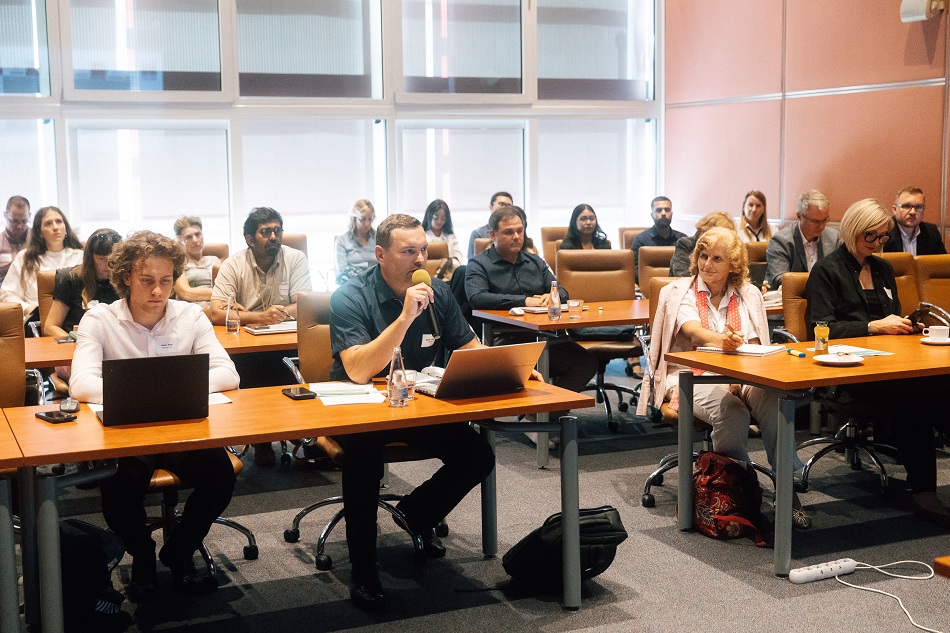
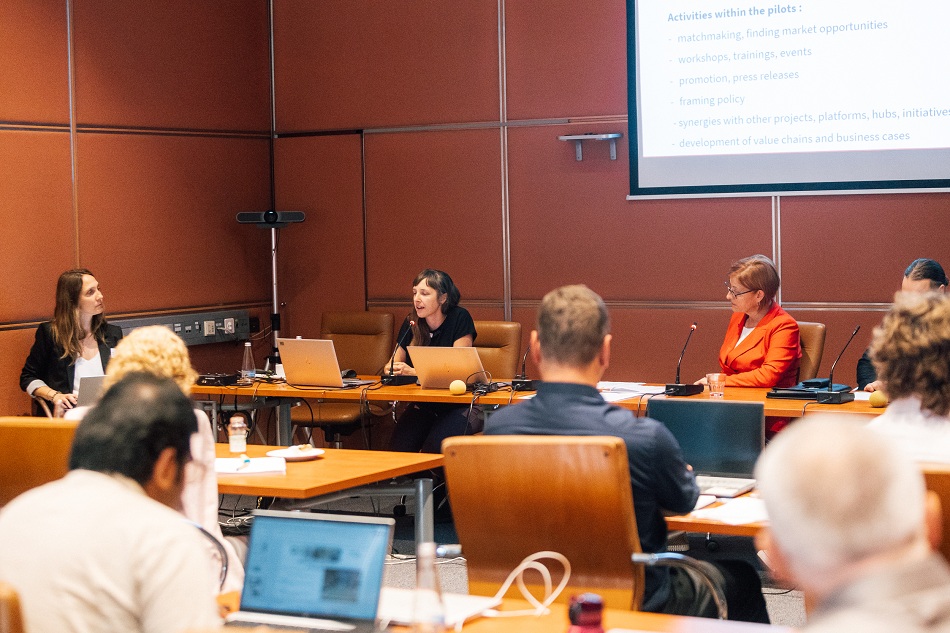
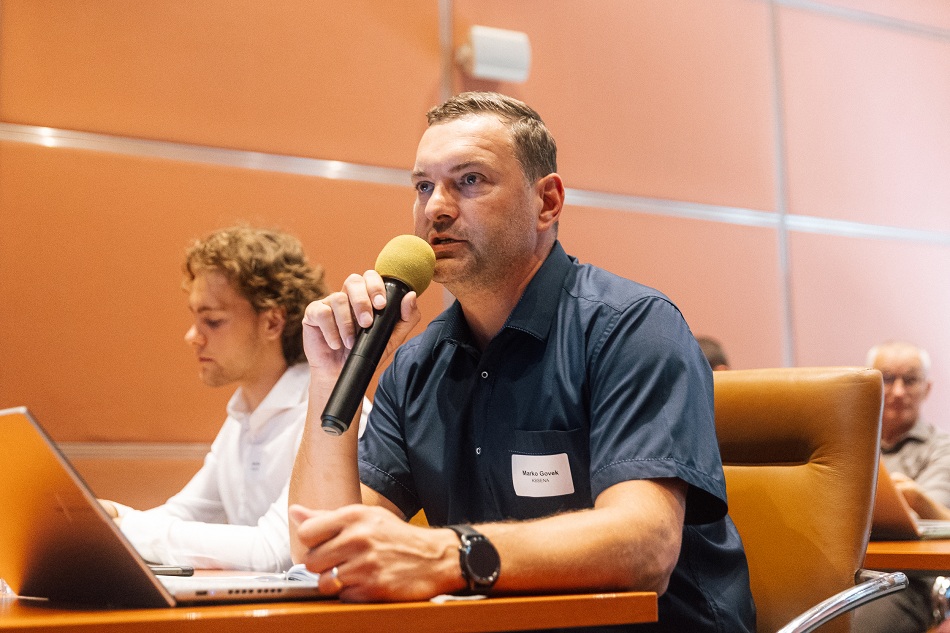
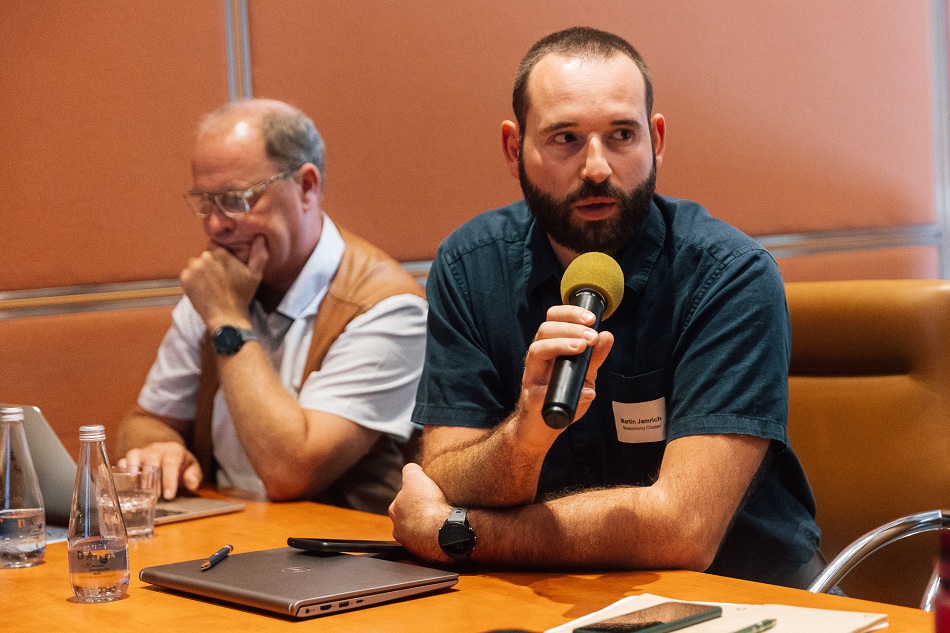
On 15 September 2025, the afternoon session of the GREET CE Bioeconomy Innovation Summit, held at the Chamber of Commerce and Industry of Slovenia, focused on concrete, market-ready innovations by small and medium-sized enterprises, and their importance in creating new value chains within the European bioeconomy. The discussions centred on the need for open cooperation and cross-border networking, as well as the idea that innovation should be understood as a joint effort involving researchers, companies, public institutions and investors, rather than an exclusive academic activity.
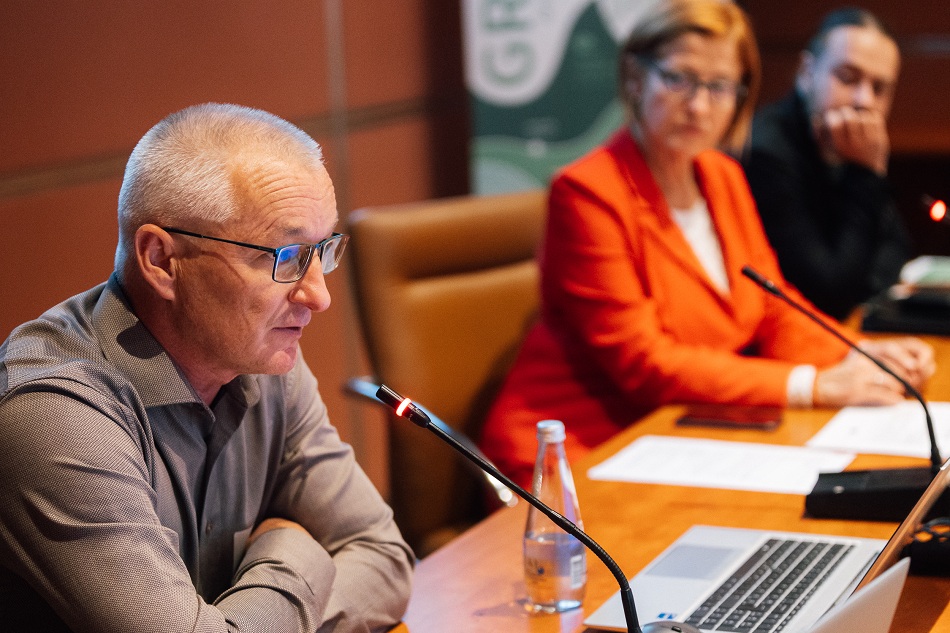
Marko Hren, Head of the Directorate for Smart Specialisation Strategy, opened the event with an introductory speech. He highlighted the current transformation of the Slovenian S3 framework into S5, emphasising the central role of biotechnology, nanomaterials, healthy materials, and a sustainable built environment in the new development paradigm. Mr Hren pointed out that measures and funding would be directed towards supporting products with a high TRL (6–9), and announced the publication of a public call for proposals under the €100 million European STEP platform. The aim of this funding is to encourage the development of solutions that are relevant to the market and can be directly integrated into the economy. In this context, the GREET CE project offers practical solutions by developing pilot projects that establish new value chains with pioneering bio-based products and services. The project’s pilot areas — from eco-construction and digital sustainable energy to regenerative agriculture and renewable gases — incorporate digital technologies such as BIM and artificial intelligence, as well as bio-based and recycled materials, circularity, traceability and reuse models. Innovative business and financial approaches are also employed, including community financing and regional investment platforms.
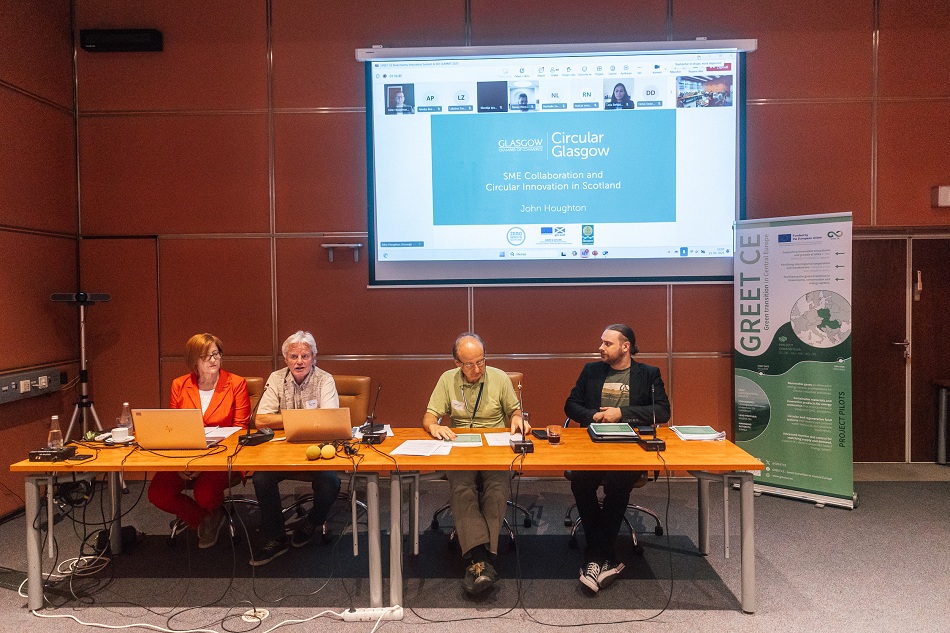
In his presentation, John Houghton, a representative of the Glasgow Chamber of Commerce, emphasised the importance of interregional cooperation, continuous institutional support and the mobilisation of the private sector as key factors in achieving sustainable progress. He emphasised the role of the ‘Sustainable Glasgow’ platform, which accelerates low-carbon innovation by bringing together businesses, research and educational institutions, and local authorities to develop regional net-zero strategies. He provided specific examples of support for innovative projects in the fields of the bioeconomy, the circular economy, and sustainable mobility, emphasising capital support for SMEs within systematically designed public–private partnerships. He referred to the article ‘Want to fix the climate? Fix the Economy!’ (authors: Hepburn, Stern, Stiglitz et al.), to illustrate the fundamental thesis that economic transformation is inextricably linked to the green transition. The article emphasises that economic instruments such as investments in sustainable infrastructure, support for SMEs and the restructuring of financial incentives are not merely environmental measures, but also necessary economic policies for strengthening competitiveness and long-term stability.
Houghton concluded by pointing out that concrete solutions do not emerge in isolation, but through dialogue, networking and the strategic development of ecosystems between cities, regions and companies operating at the intersection of sustainability and economics.
The Pitch Deck section featured seven companies whose solutions represent the intersection of research, entrepreneurship and marketable innovation.
Sewergy (Slovakia) develops advanced solutions for recovering energy from wastewater and sludge. A combination of biological treatment and digital control systems enables waste streams to be converted into renewable energy sources, offering significant potential for municipalities and industrial areas. Creatiger (Hungary) presented the VIZION modular system, which is self-sufficient in terms of energy and can be connected and used immediately. It is designed for capturing, storing and monitoring water resources and is based on smart technology for water management and protection. This solution includes the award-winning Smart Buoy product, which is used for the remote monitoring of water levels and quality and has received the BigSEE award. CoGreen (Slovenia) addresses the field of healthy and energy-efficient construction with structural solutions made of hempcrete, produced from locally sourced raw materials and natural binders. Rutena/Mycopor (Slovenia) develops 100% biodegradable, waste biomass-based insulation and building composites made from mycelium that are already being used in architectural applications. Earthbound (Croatia), formerly MIRET, manufactures 97% bio-based sneakers made from hemp, wool, cork and natural latex. Their products have received several international awards and represent a successful example of sustainable fashion with global reach. Eko Lika GREENNovation (Croatia) offers organic fertilisers and repellents made from sheep’s wool under the Woolee brand. These products are manufactured using a patented, chemical-free technology that significantly increases yields, reduces the need for artificial additives and improves soil structure. ProductFeed (Slovakia) presented the Creator of HUMUS concept, which uses Marcel Mézy Technologies’ methodology to compost organic matter into high-quality humus for regenerative agriculture and to improve soil water retention.
The event clearly demonstrated that the purpose of the I3 (Interregional Innovation Investments) instrument is to provide companies with market-ready solutions with access to investment, which is often limited by access to resources for expansion. The I3 instrument enables co-financing, cooperation between regions and sectors, and the formation of consortia between companies, researchers and investors.
Managed by EISMEA, the I3 instrument has been identified as a vital mechanism for providing financial support to SMEs through co-financing, with a focus on interregional collaboration and fostering stable partnerships. The aim of the I3 instrument is to ensure that innovations with a high technology readiness level (TRL) are translated into commercially successful products and services that can be made accessible to wider markets and are capable of facing real economic conditions.
Leila Behjat (DEMO, NTNU) emphasised the importance of a comprehensive support system, covering technical validation, business preparation and financial mechanisms that enable companies to not only survive, but also break through and grow. Leila Behjat emphasised the importance of trust management in a networked environment where the quality of cooperation determines the speed of innovation implementation.
In her speech, Leila Behjat, an expert at the EU’s Healthy Materials Lab, emphasised the importance of material health, supply chain transparency, and the inclusion of ecologically verified materials and practices in project designs from the outset. She stressed that SMEs must have access to this information, standards and materials, as the quality and health of materials are becoming a key part of their competitive advantage. She conveyed the importance of a comprehensive support system, covering technical validation, business preparation and financial mechanisms that enable companies to survive, break through and grow. Ms Behjat also emphasised the importance of trust management in a networked environment, where the quality of cooperation determines the speed at which innovations are implemented.
Petra Marinko presented best practice examples from Trbovlje, where the Non Tox Uni Kum collective renovated public spaces with complete traceability and transparency of supply chains, with the help of local partners and certified bio-based materials. This example proves that, with the right strategic direction, cooperation and transparency in production, sustainable solutions can become part of everyday life.
The GREET CE project’s eco-construction pilot provides concrete answers to these requirements by developing new value chains that incorporate digital technologies, such as BIM and artificial intelligence, as well as bio-based and recycled materials, circularity, traceability and reuse models. The project also explores innovative financial approaches, including community financing and regional investment platforms. One of the main obstacles to SME growth is regulatory and market barriers, which must be overcome through coordinated policies, strategic consortia and stable access to finance.
The event emphasised that transcending sectors (construction, energy, agriculture and digital technologies) and establishing dialogue between research institutions, policymakers, SMEs and financial institutions is not only desirable, but necessary for the EU’s resilience and competitiveness in an uncertain geopolitical environment.
The second half of the event featured a concise presentation on how collaboration between businesses, policymakers, and researchers can result in the implementation of practical projects based on new business models, the sustainable use of resources, and the transcendence of sectoral boundaries. The focus was on removing regulatory and market barriers that prevent SMEs from entering or expanding in the market, and on the importance of providing support in creating investment platforms and scaling solutions. The event also responded to the message in the Draghi report that Europe must strengthen its economic competitiveness by integrating innovation, investment mechanisms, and strategic value chains.
The first part of the event confirmed this with a presentation of good practices (Non-Tox Uni Kum), while the afternoon session showcased concrete innovations that require timely support to achieve a breakthrough in the market. The event concluded with the clear message that even the best strategy can quickly be put to the test without concrete support in the economy, and that its true value only becomes apparent when confronted with the reality of the market. This is where innovation policy must prove itself, delivering actual breakthroughs rather than just promises.
There was an important emphasis on the I3 instruments managed by EISMEA. These are key EU financial mechanisms designed to connect regions with different levels of development, co-financing up to 70% of the costs of market-based innovation projects developed in consortia and consistent with smart specialisation strategies.
The I3 instrument was presented as a bridge between the laboratory and the market because it supports concrete products and services that are ready for implementation, rather than basic research. The importance of cooperation between regions, especially between more and less developed ones, was emphasised as a means of achieving greater European cohesion and competitiveness, as highlighted in the Draghi Report. The report warns that Europe must better align innovation policies with investment realities.
Green growth can only be achieved if it is deeply embedded in the economy — not just as a declaration, but as a model that provides useful solutions, added value, jobs and sustainable competitiveness. GREET CE is a platform that brings together innovation, partners and resources to help SMEs realise their potential in practice. The clear goal is to achieve a market breakthrough, scale up and bridge the gap between policy and practice.
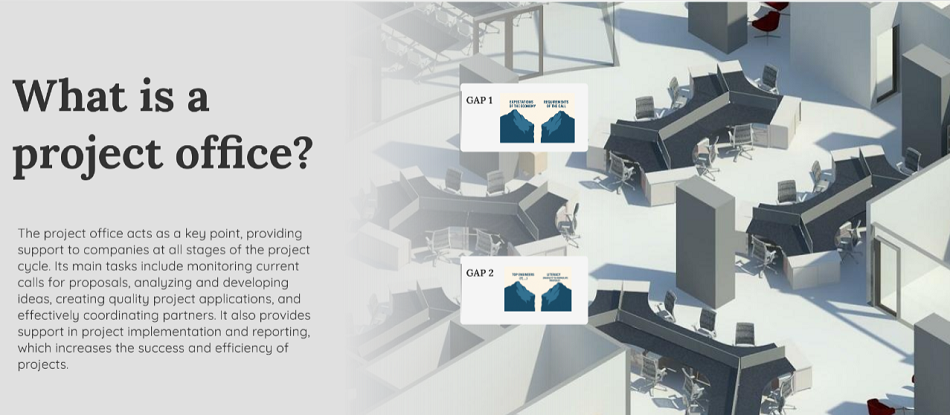
On 4 September 2025, the Chamber of Construction and Building Materials Industry of Slovenia (CCIS) organised an expert webinar titled “From Idea to European Funding – Preparing Competitive Projects for I3 Calls” as part of the GREET CE project’s Eco-Construction pilot. The event was open to all pilot areas and focused on supporting innovative companies in identifying viable funding pathways aligned with the objectives of the GREET CE project, particularly through the Interregional Innovation Investments (I3) instrument. The programme addressed key elements of project development: crowd-lending models, consortium building, the role of expert project offices, collaboration with consultancies, and strategic capacity building of SMEs to accelerate investment readiness. In the introductory address, Alenka Bea Logar Pučnik (CCIS) underlined that climate goals must be translated into real economic solutions. Sustainability, circularity, and bioeconomy are not abstract ideals but concrete innovation domains that must be underpinned by investment logic, market application, and blended financing models. She presented I3 as a central EU instrument supporting scale-up, cross-regional partnerships and the integration of smart, circular, and competitive solutions, fully in line with Smart Specialisation Strategies. Expert contributors offered valuable practical insights.
Dr Aleš Hančič (TECOS) explained the role of intermediary organisations and technology centres in long-term support for SMEs, stressing the importance of strategic patience, reputation building, and alignment with larger industrial actors.
Miha Jazbinšek (MK Projekt) highlighted the critical need for reliable and responsive partners and the formation of project teams with operational synergy.
Primož Praper (EUTRIP) presented two key strategic challenges in EU project development: bridging the gap between innovation and funding, and bridging the implementation gap between SMEs and real market deployment.
The open discussion reinforced the central dilemmas facing SMEs in the scale-up phase. Participants emphasised the tension between the urgency of business development and the slow pace of public funding cycles, the resource intensity of preparing competitive project proposals, and the difficulty of accessing capital during critical development periods. The importance of a supportive project environment, legal protection for collaborative innovation, and cost-efficiency in proposal preparation were also underlined. The session concluded with a clear message: innovative SMEs are the core drivers of the green and digital transition. What they need is access to capital, trusted partnerships, and a funding logic that supports their real-world implementation capacity.
In Europe’s green and digital transition, early-stage innovation needs more than great ideas – it needs funding. The Greet CE project, which focuses on circular and bio-based economy value chains – especially in eco-construction, regenerative agriculture, digital energy, and renewable gases – strongly benefits from innovation ecosystems that connect green startups with smart capital. One of the countries covered by the Greet CE project is Romania that already has some crowdfunding success stories. These are presented in this press release.
🌱SeedBlink is a European crowdfunding service provider (digital platform) established in Bucharest, Romania that blends venture capital and equity crowdfunding, enabling individuals and companies to invest in innovative tech startups. It has financed a series of innovative green economy SMEs from Romania and other countries. SeedBlink itself has been financed by venture capital.
🌿 Circular and bio-economy startups funded via SeedBlink
It offers a low-code development environment that allows faster, lower cost development applied in smart farming, green public infrastructure and bioeconomy governance.
A SaaS platform that supports farmers and researchers with field-level crop data, disease detection, and yield analysis, crucial for climate-resilient, regenerative agriculture. Also part of Nextcelerator, a digital agriculture program backed by Agricover and Microsoft.
An AI-powered wearable device that helps visually impaired people navigate the world independently. Originally focused on rural regions and agriculture-related mobility. Since then, it has also raised USD 5 million venture capital.
🚀 The above examples show how crowdfunding can assist circular and green innovation across Central and Eastern Europe.
Technology and business innovations and supportive European legislation has made it possible for Croatian, Hungarian, Polish, Portuguese, Romanian, Slovakian and Slovenian citizens to invest in ventures that combine positive environmental and social impact with profits.
The Greet CE project aims to foster bioeconomy solutions and promote crowdfunding. Therefore, it assists innovative European SMEs or projects and citizens seeking crowdfunding deals. One of the fields it focuses on is sustainable energy.
There have been numerous solar photovoltaic projects using crowdlending due to the risk profile of these projects that rely on standardised technologies and have relatively predictable cash-flows. Crowdlending allows citizens to contribute small amounts of money pooled together to fund larger projects.
Like any investment, crowdfunding solar panels carries risks. It’s important to research each project and the regulatory environment carefully before investing.Currently or soon open solar PV crowdlending investment opportunities (some of them with electricity storage)