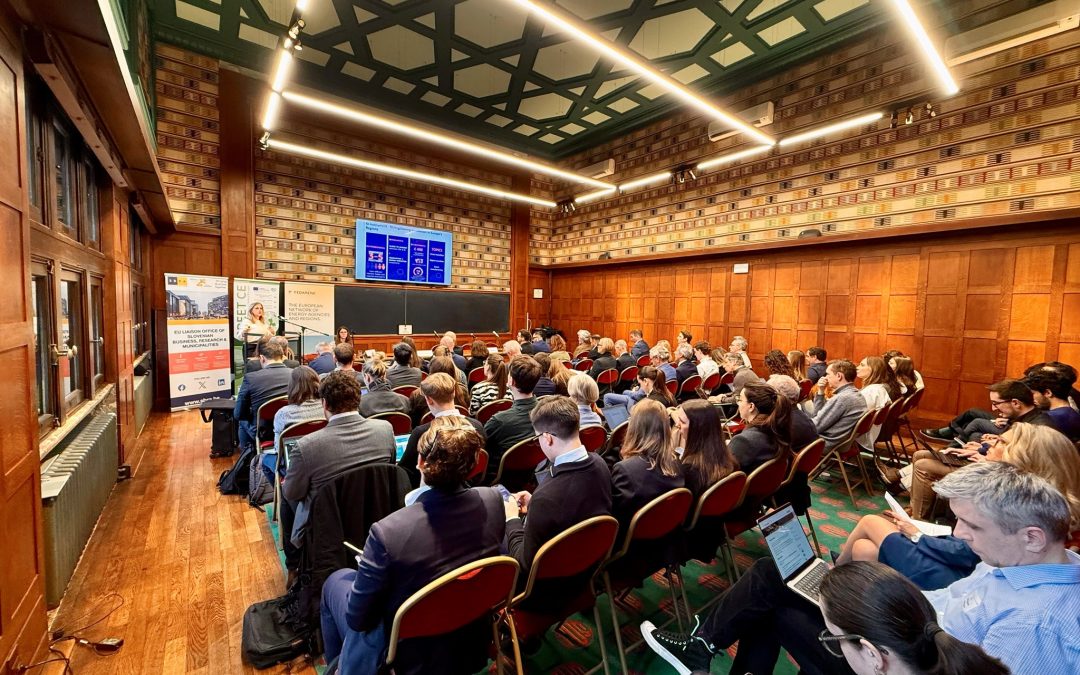
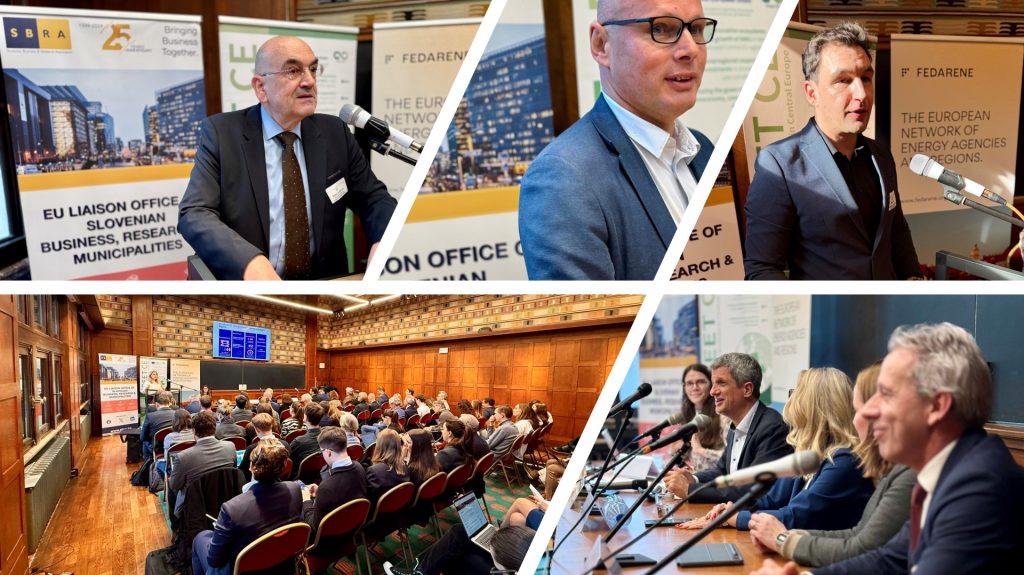
On 18 February 2026, one day before the official completion of the GREET CE project, the partnership gathered in Brussels for the GREET CE Final Conference – “Strategy to Scale: Interregional Innovation Investments for a Resilient Europe.”
The hybrid event took place at the prestigious University Foundation (Fondation Universitaire), Rue d’Egmont 11, bringing together nearly 100 participants onsite and additional stakeholders online from across Europe. The historic wood-panelled meeting hall — a venue that hosted Albert Einstein, one of the greatest scientific minds in human history, during his visits to Brussels in the 1920s — provided a symbolic setting for reflecting on Europe’s long tradition of knowledge, innovation and cooperation.
27 months of interregional cooperation and innovation
After 27 months (Nov 2023 – Feb 2026), GREET CE successfully demonstrated how interregional ecosystems, SMEs and innovation actors can collaborate to advance the green transition across Central Europe.
The conference highlighted results from GREET CE 4 pilots and investment pathways.
Strong EU policy and innovation dialogue
High-level speakers from EU institutions and European networks addressed the role of interregional cooperation and investment instruments, including:
Maja Ferlinc (EISMEA) — Supporting circular supply chains with I3
Davila Diaz (DG AGRI) — Sustainable agriculture and resilience
Daniel Ács (BEC) — Bio-based value chains
Mickael Bianchin (FEDARENE) — EU policy perspectives
They were joined by regional agencies and cluster representatives including KSSENA, CCIS, EIHP, EGEC, DELFY and others.
SMEs and pilots driving real innovation
The programme featured several SMEs and innovation actors involved in GREET CE pilots and value chains, including:
MYCOPOR / Rutena (SI) – mycelium-based composites
CELIQUM (RO) – cellulose insulation
SADDAR (PL) – recycled plastic anchoring systems
Indeloop (HR) – circular composite recycling
Biograda (SK) – bio-waste valorisation
VoltVert (RO) – renewable energy communities
Sewergy (HU) – wastewater heat recovery
NON TOX HUB (SI) – bio based building materials
These examples illustrated how GREET CE supported market-ready circular solutions across sectors from construction to energy and materials.
Supporting I3 cascade funding: DEREMCO
A dedicated session presented results of the DEREMCO I3 project, including cascade funding to SMEs. Slovenian company MYCOPOR (Rutena d.o.o.), part of the GREET CE eco-construction pilot, was among funded innovators developing mycelium-based circular composite materials.
Lasting legacy beyond the project
Although the GREET CE project formally concludes on 19 February 2026, its impact continues.
Its legacy remains preserved on the project platform: 👉 www.greetce.eu
and will live on through:
new interregional innovation partnerships
collaboration between SMEs and support organisations
investment-ready circular value chains
continued cooperation among regional intermediaries
GREET CE has demonstrated that interregional cooperation can turn green innovation into scalable business reality across Europe.
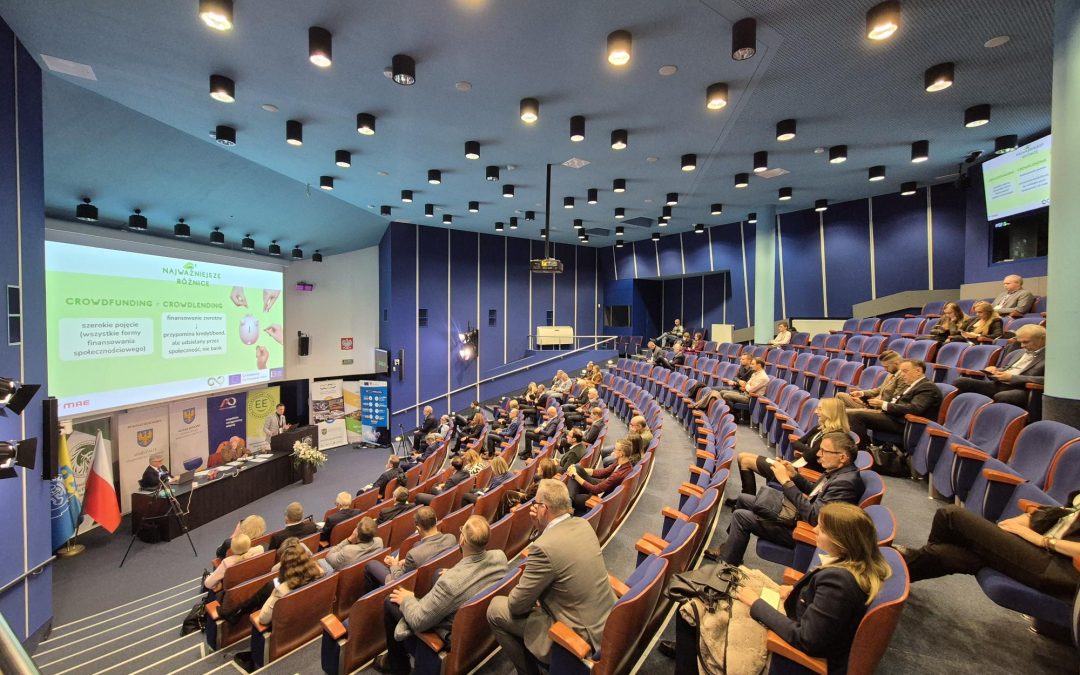
Crowdfunding and crowdlending in Poland are developing dynamically, enabling the raising of capital from the community. Crowdfunding includes various models (equity-based, reward-based, and donation-based), while crowdlending involves providing loans with an obligation to repay them with interest. As a partner of the GREET-CE project, Mazovia Energy Agency prepared a draft report, that highlights although charity-based and reward-based crowdfunding are better known and widely trusted in Poland, investment crowdfunding and crowdlending have encountered significant challenges. These difficulties are mainly the result of well-publicised failures and fraud scandals, which have significantly reduced public trust in these financing models. The report analyzes economic, legal, and social factors impacting crowdlending, including public attitudes, demographic profiles, and recent experiences with various crowdfunding models (charity, bonus, and investment). It also reviews the sector’s decline following scandals in crowdinvesting, which damaged trust. Nevertheless, new, licensed platforms such as Crowd Real Estate, Europpa, and Finansowo.pl mark a shift toward safer, more credible investment environments. Key recommendations include increasing financial education, rebuilding trust through transparent communication, and leveraging media to promote positive outcomes. Crowdlending could become a powerful tool for mobilizing capital for innovative and socially impactful ventures, particularly in bioeconomy, real estate, and green energy, if public trust and awareness are adequately nurtured. The report concludes likewise that crowdlending in Poland can develop successfully if supported by strong regulation, transparent communication, financial education and effective use of digital and social media channels. Rebuilding trust and increasing public awareness are essential for crowdlending to become a meaningful source of financing for green and innovative projects in Poland.
What is more, another report[1] analyzes polish regulations, with a focus on crowdfunding used for business and investment purposes. It describes crowdfunding as a method of raising funds online from a large number of people through dedicated platforms. Furthermore, it outlines the role of European Union law, in particular EU Regulation 2020/1503, which introduced a unified legal framework for crowdfunding services across the EU. This regulation aims to standardize rules, increase investor protection, and enable crowdfunding platforms to operate more easily across borders. The report explains also, how Poland implemented this EU regulation through a national law adopted in July 2022. This Polish law sets out the legal conditions for operating crowdfunding platforms in Poland and ensures compliance with EU requirements. It also highlights that crowdfunding platforms operating under this framework must obtain authorization and are supervised by the Polish Financial Supervision Authority (KNF). Overall, the report provides a legal overview of the crowdfunding framework in Poland and is intended for businesses, investors, and crowdfunding platform operators who want to understand the applicable regulatory requirements. On 18 November, 2025 representatives of the Mazovia Energy Agency participated in the National Eco-Energy Festival in Opole to promote crowdfunding and crowdlending opportunities in Poland. The event aimed to raise awareness of eco-energy, support knowledge exchange, and connect science, business, and investors, with a strong focus on local governments and prosumers. A key element of the festival was the good practices workshops and the participation of international experts sharing technological and financial solutions. During the event, Cezary Molski presented on the Green Transition in Central Europe, highlighting the role of crowdfunding and crowdlending within the GREET-CE project. The festival provided an excellent platform for networking, international cooperation and promoting innovative green energy solutions aligned with GREET-CE objectives.
CEN (European Committee for Standardization) and CENELEC (European Committee for Electrotechnical Standardization) are European associations that bring together national standardization bodies from 34 countries. They provide the institutional framework for developing European standards across a wide range of sectors — from construction, energy, materials and ICT, to smart systems and electrotechnical infrastructure — supporting innovation, reducing market fragmentation, and enabling interoperability across the Single European Market.
In the context of Europe’s green and digital transitions, standardisation is gaining increasing relevance as a strategic instrument for fostering innovation, supporting regulatory coherence, and enhancing the competitiveness of industrial ecosystems. Within the GREET CE project, which promotes cross-regional collaboration and value chain development in fields such as bio-based construction, renewable energy systems, industrial symbiosis, and innovative sustainable finance, standardisation provides a critical enabler for scalability, interoperability, and market uptake of new technologies and business models.
New Survey to Support Evidence-Based Innovation Policy
To advance a comprehensive understanding of how standardisation contributes to innovation and policy, the European Commission has launched the second edition of the European Standardisation Panel Survey. The initiative collects structured insights from stakeholders on the integration of standards into R&I activities and their role in achieving strategic goals under Framework Programme 10 (FP10) and the future European Competitiveness Fund.
Institutional Commitment to Standards in Innovation Ecosystems
CEN and CENELEC welcome this initiative and reaffirm their commitment to enhancing the role of standards within Europe’s innovation ecosystem, in line with their Strategy 2030. This ongoing commitment aligns with broader EU efforts such as the EU Industrial Symbiosis Standardisation Roadmap, developed through the RISERS project, which brings together key European stakeholders to promote industrial transformation aligned with circular and sustainable principles.
Call for Stakeholder Participation
Stakeholders from industry, research and innovation, public authorities and civil society are invited to participate in the survey and contribute to shaping the future of European standardisation policy. The results will be published in 2026 and are expected to inform the direction of future EU innovation programmes and funding instruments.
Business Angels Europe unites national angel investor federations and networks, representing over 40 000 individual angel investors and facilitating cross‑border collaboration, knowledge-sharing, and access to capital for emerging ventures.
Aligned with GREET CE’s mission to accelerate circular, green, and digital innovation across key transition sectors — including bio-based construction, regenerative agriculture, renewable energy, and sustainable finance models such as crowdfunding – this network offers valuable opportunities for innovators seeking early-stage investment and market-ready growth.
We are pleased to announce that the ORLEN Skylight Accelerator is currently open for applications — a unique chance for startups and scale-ups to pilot their innovations within one of Central Europe’s largest energy companies.
What ORLEN Skylight Offers
Selected companies get the opportunity to test their solution under real-world conditions using ORLEN Group’s infrastructure.
The programme covers pilot implementation funding, access to expert mentorship, and a potential path toward commercial deployment within ORLEN’s ecosystem.
ORLEN operates the Accelerator on a non-equity basis — participating startups retain full rights to their technologies.
Who Should Apply
ORLEN is seeking solutions addressing current industrial and energy-sector challenges. The 2025 call includes a variety of issues — from smart energy integration and grid management to Industry 4.0, energy storage, waste-to-value and circular technologies. Startups with a working prototype (PoC or MVP) are eligible to apply.
Application Deadlines
The current round runs until 30 November 2025. Interested companies are encouraged to apply early.
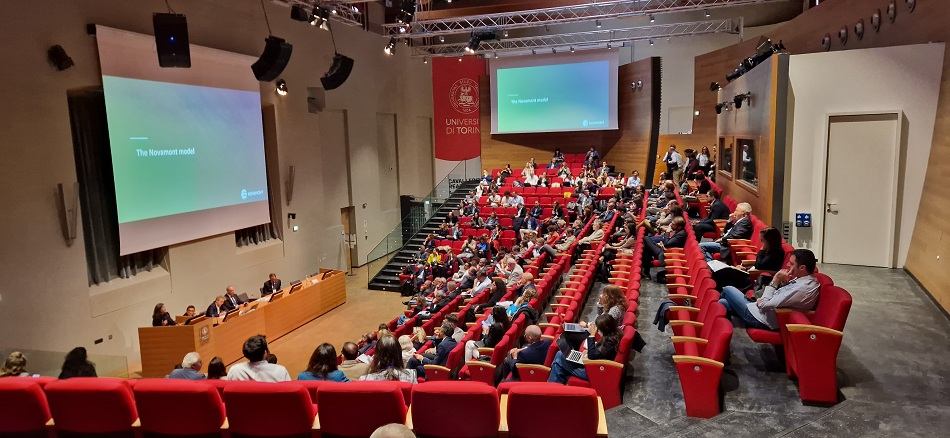
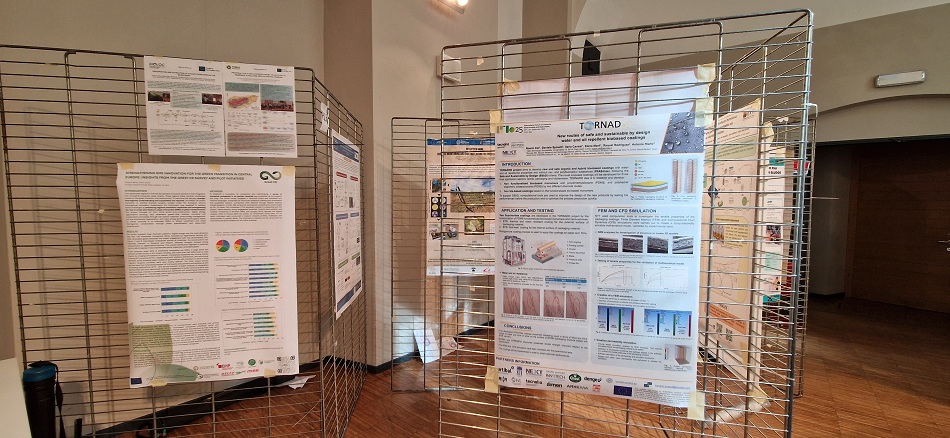
The GREET CE project was proudly presented at IFIB 2025 – the International Forum on Industrial Biotechnology and Bioeconomy, held in September in Turin, Italy. As one of Europe’s leading events on bioeconomy and industrial biotech, IFIB gathered key players from research, industry, and policy to explore innovative solutions for a more sustainable future.
At the event, GREET CE was showcased through a dedicated poster presentation, illustrating how the project enhances innovation capacities of SMEs and fosters cross-sectoral cooperation across Central Europe. GREET CE focuses on four key transformation areas: 🟢 Eco-construction 🔵 Digital sustainable energy 🟤 Regenerative farming 🟡 Renewable gases
These thematic pilots reflect the project’s commitment to empowering regions and enterprises to engage in circular, green, and innovation-driven transformation, aligned with EU cohesion and innovation policies.
Participation in IFIB 2025 offered a valuable opportunity to connect with European and international stakeholders active in the bioeconomy ecosystem. It also served as an important platform to present GREET CE’s interregional value chains, tools for policy improvement, and pathways for greater SME involvement in innovation funding—notably within the I3 Instrument and similar EU programmes.
We warmly thank the IFIB organisers and all visitors who engaged with us at the forum. The feedback and discussions confirm a shared drive towards a more circular, sustainable and collaborative Europe.