District heating has a significant role in Central European countries.
This webinar raises awareness of highly innovative technologies that can enable the utilisation of waste generated in urban infrastructure. It features Central- European firms that have technologies with high potential impact in the district heating sector – and other sectors.
Three presentations will introduce a solution that utilises wastewater waste heat, with a heat generation potential of over 10 MW in larger cities with over 100,000 inhabitants, a successful heat storage startup with significant international references and European investment, and an award-winning technology that converts CO2 created in energy production to useful materials. All three technologies can have major impact on the environmental and financial sustainability of district heating and geothermal energy production. This webinar is organised jointly by two Interreg projects (REHEATEAST and Heat 35) and two Horizon Europe I3 projects (Greet CE and Greet Geo). Energy Institute Hrvoje Pozar is a partner in all the projects. All projects focus primarily on Central and Southern Europe.
Award-winning patented (in 37 countries) solution utilizing wastewater (waste heat) to generate environment-friendly and cost-effective energy for heating and cooling buildings – with significant references of over 10 MW heat capacity
Scalable low temperature electrochemical technology that uses renewable energy to directly convert CO2 into e- chemicals, such as carbon monoxide, ethylene, and other products – winner of the EIT Manufacturing Day BoostUp! East 2025 pitch competition first prize in 2025. It is one of the six finalists in the Climate, Energy and Mobility sector for the European Commission Innovation Radar Prize 2025, an annual initiative celebrating the most promising EU- funded startups and innovators. The event will be held on 10 November 2025 in Lisbon.
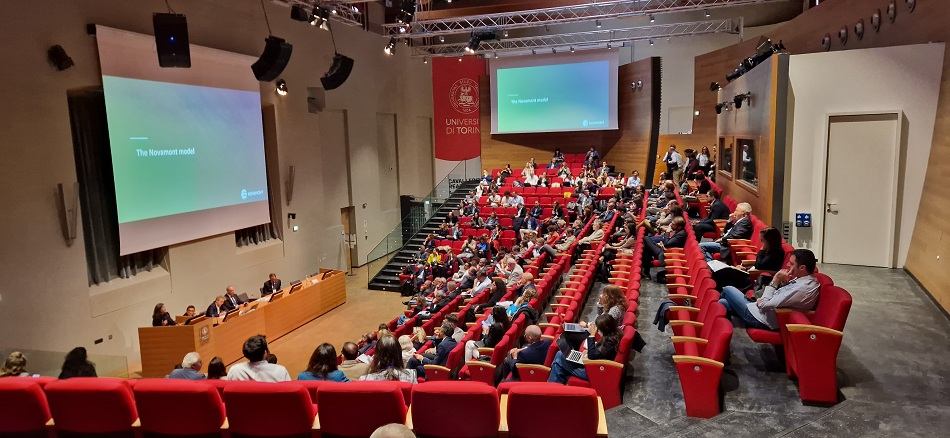
The GREET CE project was proudly presented at IFIB 2025 – the International Forum on Industrial Biotechnology and Bioeconomy, held in September in Turin, Italy. As one of Europe’s leading events on bioeconomy and industrial biotech, IFIB gathered key players from research, industry, and policy to explore innovative solutions for a more sustainable future.
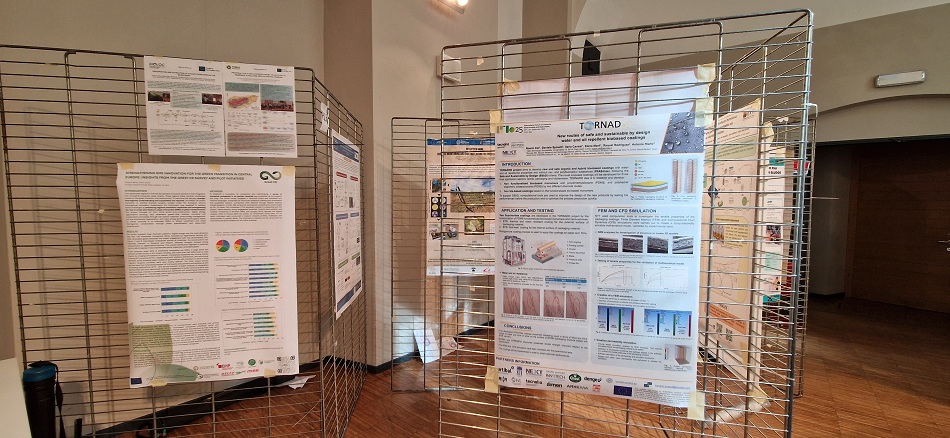
At the event, GREET CE was showcased through a dedicated poster presentation, illustrating how the project enhances innovation capacities of SMEs and fosters cross-sectoral cooperation across Central Europe. GREET CE focuses on four key transformation areas: 🟢 Eco-construction 🔵 Digital sustainable energy 🟤 Regenerative farming 🟡 Renewable gases
These thematic pilots reflect the project’s commitment to empowering regions and enterprises to engage in circular, green, and innovation-driven transformation, aligned with EU cohesion and innovation policies.
Participation in IFIB 2025 offered a valuable opportunity to connect with European and international stakeholders active in the bioeconomy ecosystem. It also served as an important platform to present GREET CE’s interregional value chains, tools for policy improvement, and pathways for greater SME involvement in innovation funding—notably within the I3 Instrument and similar EU programmes.
We warmly thank the IFIB organisers and all visitors who engaged with us at the forum. The feedback and discussions confirm a shared drive towards a more circular, sustainable and collaborative Europe.
The European Court of Auditors Review 05/2025 offers one of the most thorough analyses of how Smart Specialisation Strategies (S3) are driving regional innovation across Europe — guiding over €70 billion in cohesion policy investments between 2014–2027.
Key messages and insights
1. Strategic focus, but limited coherence S3 replaced fragmented spending with targeted regional priorities. However, coherence with EU-wide industrial and skills agendas (e.g. semiconductors, hydrogen, green transition) remains weak, reducing impact.
2. The Entrepreneurial Discovery Process (EDP) This participatory approach — involving businesses, academia and civil society — is now mandatory, but 46% of regions find it highly demanding. Many lack the capacity or partnerships to make it meaningful. VET providers and Centres of Vocational Excellence (CoVEs) could be systematically included to connect innovation with the skills base required for implementation.
3. Interregional cooperation: still underused The new S3 Community of Practice and S3 Observatory foster collaboration, but many regions don’t engage. Stronger links between VET, universities, and industry can boost innovation diffusion and support the twin transition.
4. Monitoring and evaluation: a weak pillar No EU-level evaluation of S3 has been conducted since 2014. Indicators vary widely, hindering learning. The ECA calls for simpler, comparable tools — and for assessing skills outcomes alongside innovation results.
5. The missing link: skills for smart specialisation The European Social Fund+ can finance “skills for S3”, but this lever is underused. To succeed, regions need skills ecosystems built on collaboration between:
Universities, advancing R&D and innovation leadership.
VET and CoVEs, developing the applied competences industry needs.
Together they enable innovation to scale.
Three priorities for the next generation S3
Align S3 with EU industrial and skills strategies
Integrate VET, CoVEs and universities into the EDP and regional governance
Evaluate success through both innovation and skills impact
9:00 – 18:00. Clustering workshop (Colégio dos Jesuitas do Funchal, Madeira University)
9:00 – 11:00 Opening Speeches & presentation of projects and Madeira demonstrator
Opening speeches
José de Sousa Câmara, Vice chancellor of Innovation, Internationalisation and research, University of Madeira.
Alejandro García Gil, GENESIS project coordinator, IGME-CSIC.
Presentation of projects & Genesis demonstrator in Madeira
Alejandro García Gil, GENESIS, IGME-CSIC,
Susana / Sergio, University of Madeira, Genesis Madeira project demonstrator
Niko Natek, Greet CE, KSSENA.
Matija Vajdic, Greet GEO, Energy Institute Hrvoje Pozar.
Pilar Jordà, EnerCMed, València Clima i Energia.
Paul Brotherton, SpongeBoost, Wetlands International Europe.
11:00 – 11:30 Coffee break
11:30 – 13:00 Panel Discussion. Freshwater and wastewater management challenges in Madeira and the Macaronesia
Alejandro García Gil, GENESIS project coordinator, IGME-CSIC.
Juan Carlos Santamarta Cerezal, El Hierro demonstrator, University of La Laguna.
Iván Hernández Ríos, La Palma demonstrator, Asociación para la Investigacion de la Macaronesia.
Gilberto Manuel Martel Rodríguez, Gran Canaria demonstrator, Instituto Tecnológico de Canarias.
Ana Rita da Costa Paiva da Silva Hipólito, Faial demonstator, Trisolaris Advanced Technologies.
António Lobo de Pina, Santiago demonstrator, University of Cape Verde.
Eduardo Manuel de Almeida Leite, Madeira demonstrator, University of Madeira.
13:00 – 14:15 Lunch
14:15 – 14:30 Kristina Dely, Delfy, Greet CE project: The (potential) role of crowdfunding in impactinvestments – its potential for higher impact grant funding in insular contexts
14:30 – 15:30 Innovative solutions and tools for improved freshwater and wastewater management (Central European SMEs, organised by the Greet CE project)
Gergely Törő, CreatigerLtd., innovative water retention solutions
Marcell Szép, DFarm Ltd., irrigation solutions – less water with more results
Tamás Mendi, ClasmanLtd., drinking water generation from atmospheric air
Pál Kiss, Sewergy, digital tools facilitating cooling with wastewater waste heat
15:30 – 15:45 Coffee break
15:45 – 16:30 Open Discussion -Q&A with the speakers of the event.
Problems and solutions of freshwater and wastewater management in insular contexts
16:30 – 16:45 Concluding words and next steps
Alejandro García Gil, GENESIS project coordinator, IGME-CSIC.
🗓 Date: 23 October 2025 ⏰ Time: 13:00 – 15:00 (CET) 📍 Online (Zoom/Teams – link will be shared upon registration)
Agenda highlights:
Company pitches – presentations by producers of biofertilizers
Support opportunities – introduction of possibilities offered by the GREET CE project for SMEs in this field
Funding opportunities – overview of available programmes and instruments supporting innovation and market uptake
Discussion and networking – exchange of experiences, Q&A
This event will bring together innovative SMEs, clusters, and stakeholders interested in biofertilizers, financing options, and sustainable solutions for agriculture.
We especially encourage biofertilizer producers to register and present their solutions during the pitching session.